

Scientists Discover the ‘Holy Grail’ Gene That Could Help Humans Regrow Limbs
A landmark study using CRISPR and gene therapy points to a future where
lost limbs could be replaced by living tissue — not prosthetics
📅 Published: 14 May 2026 | 🏷 Category: Science & Innovation | ✍ Events Markaz News Flash
In a discovery that researchers are calling one of the most significant advances in regenerative medicine in decades, scientists at Wake Forest University, Duke University, and the University of Wisconsin-Madison have identified a conserved set of genes that control limb regeneration across multiple animal species — and have used that knowledge to partially restore regenerative ability in mammals using gene therapy.
The study, published on 9 May 2026 in the Proceedings of the National Academy of Sciences, brings humanity one step closer to a future where amputees may one day regrow lost limbs through biological therapies rather than relying solely on mechanical prosthetics.
The Scale of the Problem
Limb loss is a global health crisis of enormous proportions. According to Global Burden of Disease statistics cited by the research team, more than one million amputations are performed worldwide every year, driven primarily by diabetes-related vascular disease, traumatic injuries, infections, and cancer. As populations age and the global prevalence of diabetes continues to rise, that number is expected to grow significantly in the decades ahead.
For millions of amputees, existing options are limited to mechanical prosthetics — devices that can restore some function but cannot replicate the sensation, dexterity, or biological integration of a natural limb. The search for a biological solution has long been considered one of medicine’s most ambitious frontiers.
Learning from Nature’s Best Regenerators
To identify genetic pathways that might unlock regeneration in humans, the research team turned to three animal species that are among nature’s most accomplished regenerators: the Mexican axolotl salamander, the zebrafish, and the mouse.
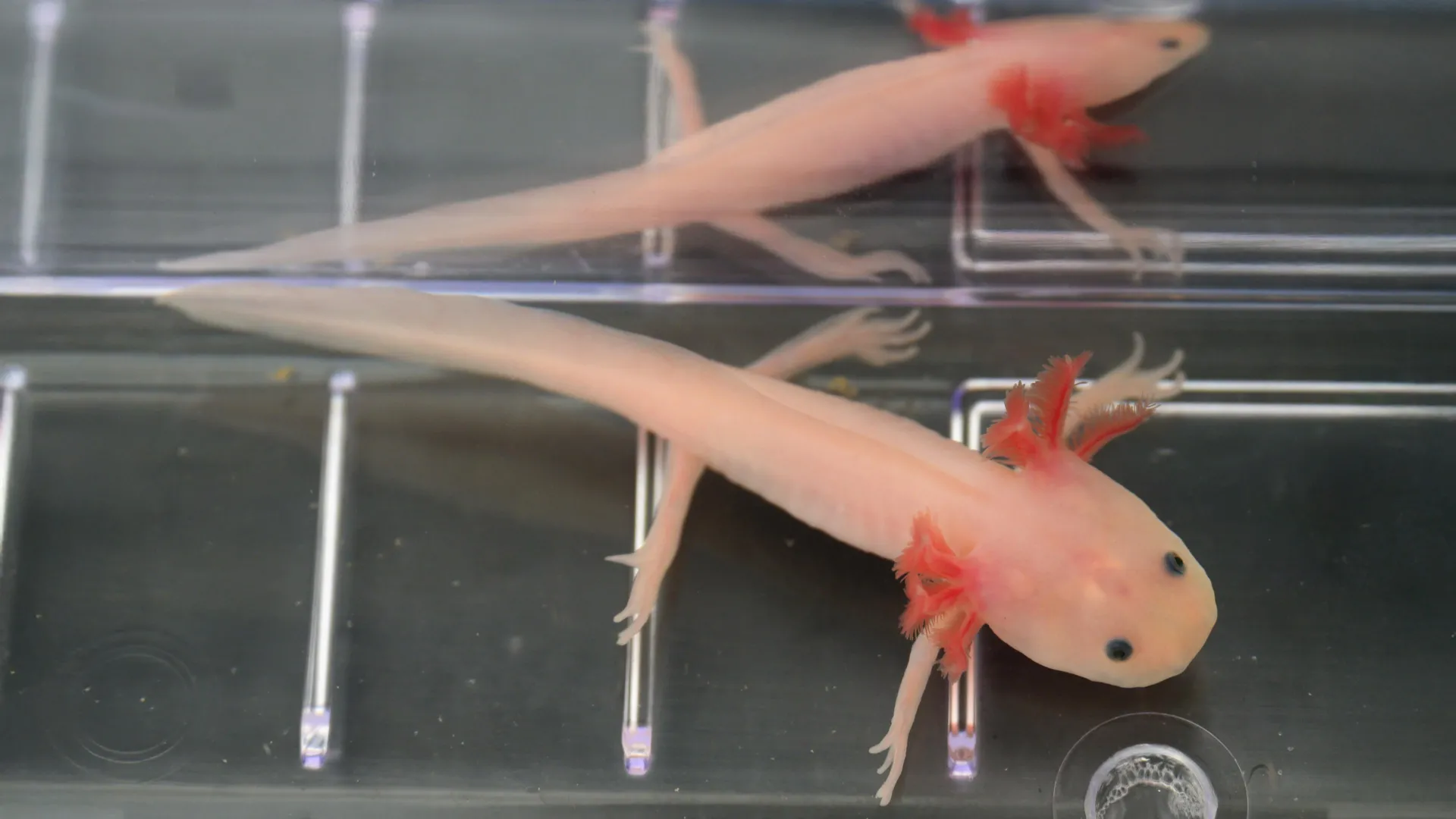
The axolotl is arguably the most remarkable regenerator in the vertebrate world. It can regrow entire limbs, including bone, muscle, nerves, and blood vessels, as well as portions of its heart, brain, lungs, liver, spinal cord, and jaw. The zebrafish, a widely used laboratory model, can repeatedly regrow damaged tail fins and repair its heart, brain, kidneys, retinas, and pancreas. Mice were selected because, as mammals, they are biologically closest to humans — and like humans, they retain a limited regenerative ability in their digit tips, provided the nailbed remains intact.
By studying all three species simultaneously and comparing which genes were activated during regeneration, the team was searching for a common genetic language — a shared regenerative program that might have been preserved across hundreds of millions of years of evolution.
The SP Genes: A Shared Regenerative Switch
The breakthrough came when researchers discovered that the regenerating skin tissue — known as the epidermis — in all three species activated the same two genes: SP6 and SP8. These so-called SP genes appear to act as master regulators of the regenerative process, switching on the biological programmes that allow damaged tissue to be replaced rather than simply scarred over.
“This significant research showed us that there are universal, unifying genetic programmes that are driving regeneration in very different types of organisms — salamanders, zebrafish and mice.” — Prof. Josh Currie, Wake Forest University
To confirm that SP8 was truly essential for regeneration, Currie’s team used CRISPR/Cas9 gene-editing technology — the same molecular scissors that have revolutionised genetics research over the past decade — to remove SP8 from the axolotl genome entirely. The result was striking: without SP8, axolotls were unable to properly regenerate their limb bones. A parallel investigation in mice found that removing both SP6 and SP8 from regenerating digit tissue produced similar deficits, with bone regrowth severely impaired.
Gene Therapy Partially Restores Regeneration in Mice
Armed with this understanding, the team at Duke University — led by plastic surgeon and researcher David A. Brown — designed a gene therapy strategy inspired by zebrafish biology. Zebrafish have a naturally occurring tissue regeneration enhancer — a genetic regulatory element that controls when and where regeneration genes are switched on. The Duke team used this enhancer to deliver a signalling molecule called FGF8, which is normally activated downstream of SP8, directly into the damaged digit tissue of mice.
The results were encouraging. The therapy stimulated bone regrowth in injured digits and partially restored some of the regenerative capacity that had been lost when the SP genes were experimentally removed. While the effect was partial rather than complete — and occurred in mice rather than humans — it constitutes the first demonstration that a gene therapy approach based on conserved regenerative biology can meaningfully influence mammalian tissue regeneration.
What This Means for Human Medicine
The researchers are careful to temper expectations. Human limbs cannot regenerate spontaneously the way axolotl limbs do, and the biological gap between a mouse digit tip and a human arm is vast. Many years of additional research will be required before any of these findings could form the basis of a clinical therapy for human patients.
Nevertheless, the implications are significant. By establishing that SP genes are a conserved and functionally essential component of regeneration across distantly related vertebrate species, the study provides a credible molecular target for future therapeutic development. It also demonstrates, in a mammalian model, that delivering the right molecular signals to damaged tissue can partially overcome the regenerative limitations that mammals normally face.
“We can use this as a kind of proof of principle that we might be able to deliver therapies to substitute for this regenerative style of epidermis in regrowing tissue in humans.” — Prof. Josh Currie
Currie envisions a future in which gene therapy, bioengineered scaffolds, and stem cell technologies work together as complementary tools in a multidisciplinary approach to limb regeneration — with SP gene-based strategies forming one important component of that broader effort.
A Model of Scientific Collaboration
Beyond its scientific findings, the study is also notable for the way it was conducted. Rather than focusing narrowly on a single model organism, three independent research groups — each with deep expertise in a different species — pooled their data and compared findings across biological systems. This cross-species, multi-institutional approach allowed the team to identify patterns that no single laboratory working in isolation could have detected.
‘Many times, scientists work in their silos: we are just working in axolotl, or we are just working in mouse, or just working in fish,’ Currie noted. ‘A real standout feature of this research is that we work across all these different organisms. That is really powerful, and it is something that I hope we will see more of in the field.’
The collaborative model employed in this study — connecting Wake Forest, Duke, and the University of Wisconsin-Madison — may itself serve as a template for future research in regenerative medicine, a field where progress has historically been slowed by the complexity of working across multiple biological systems.
Looking Ahead
The discovery of SP genes as universal regulators of vertebrate regeneration opens a new and scientifically grounded avenue of investigation in regenerative medicine. Future work will focus on understanding precisely how SP6 and SP8 orchestrate the downstream cellular events of regeneration, whether their activity can be enhanced or extended in mammalian tissue, and whether the gene therapy approach demonstrated in mice can be refined and scaled toward eventual clinical application.
For the millions of people living with limb loss around the world, this research represents not a cure — but a credible, evidence-based step in a direction that was, until recently, largely the domain of science fiction.
References & Further Reading:
- Brown, D.A., Koll, K.K., Brush, E., Darner, G., Curtis, T., Dvergsten, T., … Poss, K.D. (2026). Enhancer-directed gene delivery for digit regeneration based on conserved epidermal factors. Proceedings of the National Academy of Sciences, 123(17). https://doi.org/10.1073/pnas.2532804123
- Wake Forest University. (2026, May 9). Scientists found the ‘holy grail’ gene that could one day help humans regrow limbs. ScienceDaily. https://www.sciencedaily.com/releases/2026/05/260508003121.htm
- GBD 2019 Diseases and Injuries Collaborators. (2020). Global burden of 369 diseases and injuries in 204 countries and territories. The Lancet, 396(10258), 1204–1222. https://doi.org/10.1016/S0140-6736(20)30925-9
- Joven, A., Elewa, A., & Simon, A. (2019). Model systems for regeneration: salamanders. Development, 146(14), dev167700. https://doi.org/10.1242/dev.167700
- Gemberling, M., Bailey, T.J., Hyde, D.R., & Bhatt, D.K. (2013). The zebrafish as a model for complex tissue regeneration. Trends in Genetics, 29(11), 611–620. https://doi.org/10.1016/j.tig.2013.07.003
- Doupé, D.P., & Bhatt, D.K. (2014). Mammalian digit-tip regeneration is dependent on the nail organ. PNAS, 111(42), 15010–15015. https://doi.org/10.1073/pnas.1415010111
— Events Markaz News Flash | Science & Innovation Desk —