
The Virus That Came in From the Cold
How a Deadly Pathogen From the Andes Mountains Boarded a Cruise Ship,
Crossed Five Continents — and Why the World Was Not Ready
📅 Published: 16 May 2026 | 🏷 Category: Science & Global Health | ✍ Events Markaz News Flash
Part I — What Is Hantavirus? A Pathogen With a Long History:
Most people first heard the word ‘hantavirus’ in the spring of 2026, when international headlines began tracking a deadly outbreak aboard a cruise ship drifting through the Atlantic Ocean. But hantavirus is not new. It is a family of viruses that has been infecting humans for centuries, hiding inside rodents, and occasionally spilling over into people who venture into the wrong place at the wrong time. Understanding the 2026 outbreak requires understanding the biology and history of this ancient, elusive, and unforgiving pathogen.
Hantaviruses belong to the family Hantaviridae and are found on every continent except Antarctica. More than 50 distinct viral species have been identified to date, each carried by a specific rodent reservoir — deer mice, bank voles, cotton rats, rice rats, and many others. The viruses are zoonotic, meaning they are transmitted primarily by animals, not between people. In virtually every known strain, humans become infected by breathing in aerosolised particles from infected rodent urine, droppings, or saliva — often while cleaning an infested space, working in fields, or disturbing rodent nests. The virus can remain infectious on surfaces for several days under the right conditions.
There are two primary diseases caused by hantaviruses. In Asia and Europe, the dominant form is Haemorrhagic Fever with Renal Syndrome (HFRS) — a potentially fatal kidney disease caused by Old World strains such as Hantaan virus and Puumala virus. In the Americas, the dominant form is Hantavirus Pulmonary Syndrome (HPS) — a catastrophic lung disease that fills the air sacs with fluid, causing respiratory failure that kills between 20 and 50 percent of those it infects. HPS is, by any measure, one of the most lethal infectious syndromes known to medicine — and it has no specific treatment and no licensed vaccine.

Part II — First Isolation and Discovery (1950s–1993):
The formal scientific discovery of hantavirus traces back to the Korean War. During the conflict in the early 1950s, thousands of United Nations soldiers stationed near the Hantan River in South Korea fell ill with a mysterious disease characterised by high fever, bleeding, and kidney failure. The illness was eventually named Korean Haemorrhagic Fever, but its cause remained unknown for decades. It was not until 1978 that South Korean virologist Ho Wang Lee and his team successfully isolated the causative agent — a previously unknown virus they named Hantaan virus, after the river near which the first cases had clustered. The discovery revealed that hantaviruses had been infecting humans throughout Asia and Europe for centuries, hiding in plain sight.
The New World chapter of hantavirus history opened with sudden and dramatic force in the spring of 1993. In May of that year, a young Navajo couple living near Gallup, New Mexico, died within days of each other from a mysterious respiratory illness. Public health investigators, alarmed by the speed and severity of their deaths, launched an emergency investigation across the Four Corners region — the area where Arizona, Colorado, New Mexico, and Utah meet. What they found shocked the medical community.
A completely new hantavirus — one that had never been documented before — was causing a wave of sudden, rapidly fatal respiratory illness across the American Southwest. The virus was eventually named Sin Nombre Virus, meaning ‘Virus Without a Name’ in Spanish. Its primary reservoir was the western deer mouse, and the trigger for the outbreak appeared to be a 10-fold explosion in deer mouse populations driven by unusually heavy El Nino rains and vegetation growth the previous year. Of the first 33 cases of what would be named Hantavirus Pulmonary Syndrome, 17 people died — a case fatality rate of 52 percent. By the end of 1993, 48 confirmed cases had been identified nationwide, with 27 deaths.
“Before 1993, hantaviruses that cause disease in humans were known to spread mainly in Asia and Europe. The Four Corners outbreak revealed the existence of a second disease caused by them: Hantavirus Pulmonary Syndrome.” — CDC / New England Journal of Medicine, 1994
Once researchers knew what to look for, the footprints of hantavirus in the Americas became visible everywhere. Subsequent investigations found evidence of hantavirus antibodies in South America, and an entirely new family of New World hantavirus strains — including the Andes virus, first formally identified in 1996 in the Andes mountains of Argentina and Chile — was rapidly catalogued. The Andes virus would prove to be something uniquely dangerous among all known hantaviruses: the only strain ever documented to spread from person to person.
Part III — The Andes Virus: The Only Hantavirus That Spreads Between Humans:
Of the more than 50 known hantavirus species, 49 infect humans only through contact with infected rodents. The Andes virus — found naturally in the long-tailed pygmy rice rat (Oligoryzomys longicaudatus) in the Patagonian and Andean foothills of Argentina and Chile — is the sole known exception. Under specific conditions of close, sustained contact, the Andes virus can spread from one infected person to another. The precise mechanism remains incompletely understood; it may involve airborne transmission through respiratory droplets, close physical contact, or exposure in poorly ventilated spaces.
This human-to-human transmission capacity has been documented in several outbreaks in Argentina and Chile since the late 1990s. In the 1996 El Bolson outbreak in Argentina, secondary cases occurred among household contacts and, in one documented instance, among healthcare workers who treated patients without adequate protective equipment. The Andes virus kills between 20 and 40 percent of the people it infects. In the Americas, the virus circulates primarily in Argentina, Chile, Bolivia, Brazil, Uruguay, and Paraguay — the countries that share the Andean and Patagonian ecological zones that host its rodent reservoir.
The global hantavirus burden in 2025, the year before the cruise ship outbreak, provided sobering context. Eight countries in the Americas alone reported a combined 229 confirmed cases of HPS, resulting in 59 deaths — a case fatality rate of 25.7 percent. In Europe, 1,885 cases of HFRS were reported in 2023. In East Asia, thousands of HFRS cases occur annually in China and South Korea. Globally, hantaviruses kill hundreds of people every year in near-total silence. The 2026 cruise ship outbreak was not the beginning of a problem. It was the moment a quiet, ongoing problem became impossible to ignore.
Part IV — The MV Hondius: How the Outbreak Began:
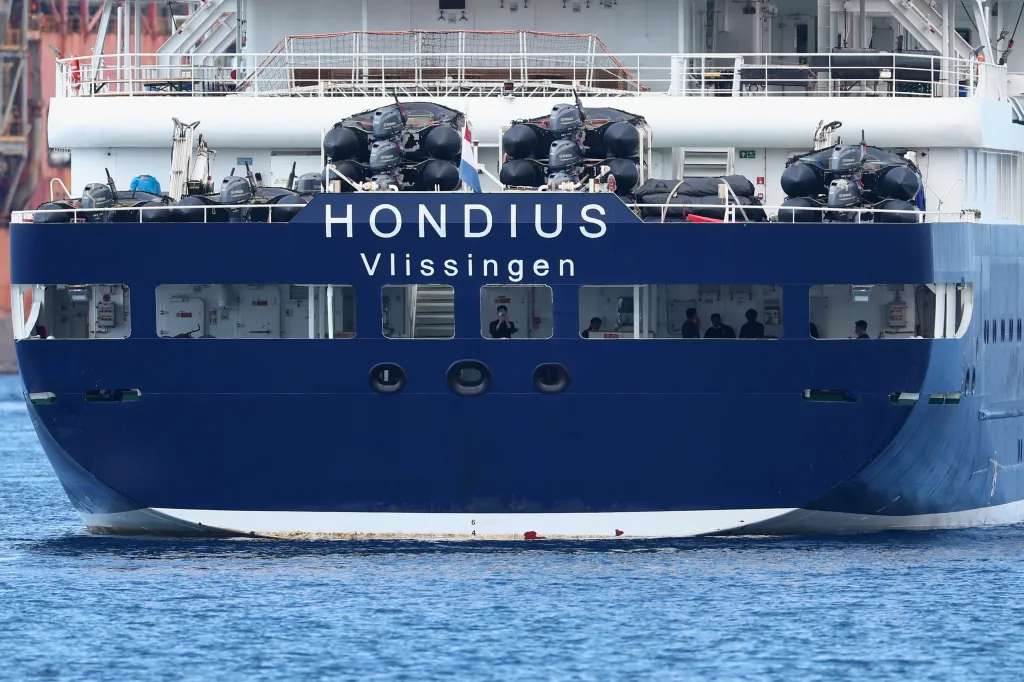
The vessel at the centre of the 2026 outbreak is the MV Hondius — a Dutch-flagged expedition cruise ship operated by Oceanwide Expeditions, carrying up to 174 passengers and crew. Named after the 17th-century Dutch cartographer Jodocus Hondius, the ship specialises in polar and remote-destination voyages, taking small groups of adventure travellers to Antarctica, South Georgia, the Falkland Islands, and the remote islands of the South Atlantic.
On April 1, 2026, the MV Hondius departed from Ushuaia, at the southern tip of Argentina — the world’s southernmost city and the primary gateway to Antarctica — with 147 passengers and crew from 23 countries on board. The voyage was scheduled to take passengers through some of the most remote and spectacular wilderness on earth: Antarctica, South Georgia Island, Tristan da Cunha, Saint Helena, and Ascension Island, before concluding at Cape Verde.
Unknown to anyone on board, the index case — a Dutch male passenger in his late seventies — was already carrying the Andes virus. Argentine health investigators later reconstructed his movements: between November 27, 2025, and April 1, 2026, the man had completed a four-month road trip through Argentina, Chile, and Uruguay — travelling through precisely the Patagonian and Andean ecological zones where the long-tailed pygmy rice rat that carries the Andes virus is endemic. He had returned to Argentina from Uruguay just four days before boarding the ship. Somewhere during those four months in some rural corner of South America, he had breathed in a particle from an infected rodent.
The incubation period for the Andes virus is one to six weeks. By the time the MV Hondius was sailing through Antarctic waters, the index case had developed symptoms. On April 11, 2026, he died aboard the ship. Hantavirus had not yet been identified. The death was recorded. The voyage continued.

Part V — The Outbreak Unfolds: A Week-by-Week Timeline:
What followed over the next several weeks was a slow-motion international crisis — a virus spreading silently among passengers on a ship in the middle of the ocean, while health authorities on multiple continents raced to understand what was happening and contain it.
The Chronology of Events:
27 Nov 2025 Index case (Dutch male) begins a 4-month road trip through Argentina, Chile, and Uruguay — passing through Andes virus endemic zones.
1 Apr 2026 MV Hondius departs Ushuaia, Argentina, with 147 passengers and crew from 23 countries.
6–28 Apr WHO-estimated window of symptom onset across multiple cases on board.
11 Apr 2026 DEATH #1 — Index case (elderly Dutch male) dies aboard ship. Cause of death not yet identified.
13–15 Apr Ship visits Tristan da Cunha — one of the most remote inhabited islands on earth.
24 Apr 2026 Body of Case 1 removed at Saint Helena. His wife (Case 2) disembarks showing symptoms and is hospitalised.
25 Apr 2026 Case 2 (Dutch female, 69) deteriorates rapidly in mid-flight to Johannesburg.
26 Apr 2026 DEATH #2 — Case 2 dies at a Johannesburg hospital. PCR testing confirms hantavirus.
27 Apr 2026 Case 3 (British male) is medically evacuated from Ascension Island to a Johannesburg ICU.
2 May 2026 DEATH #3 — A German female passenger dies on board the MV Hondius.
2 May 2026 UK IHR Focal Point notifies WHO. European Early Warning and Response System alert issued.
3 May 2026 PCR testing confirms hantavirus in Case 3. WHO issues global Disease Outbreak News alert.
6 May 2026 Viral sequencing by South African health authorities identifies the Andes virus as the responsible strain.
7 May 2026 CDC deploys emergency response team. France’s ANRS MIE activates Level 1 Outbreak Response. British military personnel parachute to the remote island of Tristan da Cunha to assess a suspected case among its 220 residents.
8 May 2026 WHO reports 8 cases total: 6 confirmed, 2 suspected. Three deaths confirmed. CDC raises response to Level 3.
10 May 2026 Ship arrives in Tenerife, Canary Islands. Passengers disembark and evacuation flights begin.
12 May 2026 Johns Hopkins Medicine reports 11 total cases: 9 confirmed, 2 suspected, 3 deaths.
13 May 2026 WHO reports 11 confirmed and suspected cases. Former passengers now hospitalised or quarantined in Australia, Canada, France, Germany, Netherlands, Saint Helena, Singapore, South Africa, Spain, Switzerland, Turkey, and the United States.
15 May 2026 American passengers repatriated to the Nebraska Biocontainment Unit and Emory University Hospital in Atlanta.
18 May 2026 MV Hondius scheduled to arrive in the Netherlands for decontamination and investigation.

Part VI — The Current Situation: Where Things Stand:
As of May 16, 2026, the MV Hondius outbreak stands as the largest confirmed human-to-human transmission cluster of the Andes virus ever documented outside South America. The numbers, while alarming in their severity, have not yet grown into a large-scale epidemic — and public health authorities continue to emphasise that the overall risk to the general public remains low.
Current confirmed statistics:
▶ 11 total cases reported to WHO as of May 13, 2026 (9 confirmed, 2 suspected)
▶ 3 confirmed deaths — case fatality rate of 33.3%, consistent with historical Andes virus mortality
▶ 1 additional inconclusive case in the United States under retesting
▶ Patients and former passengers now in 13 countries across 5 continents
▶ All confirmed cases are among MV Hondius passengers
▶ No cases of community transmission outside the ship have been confirmed
▶ All passengers under mandatory 45-day monitoring protocols
The CDC has classified the outbreak as a Level 3 emergency response — its highest category — and has issued interim guidance for public health management of people with potential Andes virus exposure. American patients have been transferred to two of the country’s most advanced biocontainment facilities: the Nebraska Biocontainment Unit and Emory University Hospital’s Special Pathogens Unit in Atlanta. In severe cases, treatment with extracorporeal membrane oxygenation (ECMO) — a machine that externally oxygenates the blood — has been shown to improve survival rates to approximately 80 percent when started early.
The WHO has not declared the outbreak a Public Health Emergency of International Concern but continues to monitor the situation closely. The organisation has emphasised that the Andes virus, while uniquely capable of human-to-human transmission, has historically only spread in close, sustained contact settings — and that previous outbreaks have not escalated into broad community transmission.
Part VII — The Bigger Picture: US Withdrawal From WHO and What It Means:
The hantavirus outbreak arrived in a global health governance landscape that had been significantly weakened by a decision made more than a year earlier. On January 20, 2025, the United States formally initiated its withdrawal from the World Health Organization, citing financial burden and governance concerns. The withdrawal began a one-year process set to complete in January 2026 — precisely as the index case of the MV Hondius outbreak was beginning his four-month journey through South America.
The significance of that timing cannot be overstated. The United States has historically been the WHO’s single largest financial contributor. In the 2022 to 2023 biennium alone, the US provided $1.284 billion to the organisation — accounting for nearly 20 percent of its total expenditures. This funding supported pandemic preparedness infrastructure, disease surveillance networks, emergency response logistics, and the global health security architecture that makes coordinated international responses to outbreaks like this one possible.
“On a global scale, the U.S. departure threatens to destabilize WHO’s funding, weaken leadership, and hinder future pandemic preparedness.” — Globalization and Health, Springer Nature, August 2025
The consequences of that withdrawal were already becoming visible before the MV Hondius ever left port. The US simultaneously shut down large portions of USAID and reduced CDC international operations, creating gaps in global disease surveillance in exactly the regions — South America, sub-Saharan Africa, Southeast Asia — where novel pathogens are most likely to emerge. The stop-work orders imposed on US-funded global health programmes halted work on disease control, vaccination campaigns, and health system strengthening in dozens of countries overnight.
Researchers and public health experts warned repeatedly throughout 2025 that dismantling the United States’ global health engagement while the world remained in a heightened post-pandemic risk environment was not a responsible policy choice. The 2026 Andes virus outbreak, which required immediate coordination among health authorities in more than a dozen countries, demonstrated precisely why that warning deserved to be heeded.
The CDC’s response to the MV Hondius outbreak — deploying a team to the Canary Islands, coordinating repatriation of American patients to biocontainment facilities, issuing real-time guidance to clinicians — was effective and professional. But it operated under a shadow: the very international health infrastructure that made that response possible had been deliberately underfunded by the same government conducting it. The tension between the US government’s domestic retreat from global health engagement and its simultaneous need to lead an international outbreak response was not lost on the public health community.
The question that public health researchers are now asking is not whether this outbreak was serious enough to justify alarm. It was. The question is what happens the next time — when the pathogen is faster, more transmissible, or more lethal, and when the surveillance infrastructure that might have caught it earlier has been further eroded. The answer, as of mid-2026, remains deeply uncertain.
Part VIII — What You Need to Know: Symptoms, Transmission, and Prevention:
For the overwhelming majority of people reading this article — those who were not passengers on the MV Hondius — the risk of Andes virus infection is extremely low. The virus does not spread through casual contact, shared air in offices or public transport, or brief social encounters. The WHO, CDC, and Johns Hopkins Medicine all emphasise that the current public health risk outside of direct passenger exposure is minimal.
Nevertheless, understanding the virus is valuable — both for those with potential exposure and for broader health literacy.
How hantavirus is transmitted:
▶ Primary route: Inhaling aerosolised particles from infected rodent urine, droppings, or saliva
▶ Secondary route (Andes virus only): Close, sustained contact with an infected person — household exposure, caregiving without PPE, prolonged time in poorly ventilated spaces
▶ Not transmitted by: Brief casual contact, shaking hands, or normal social interaction
Symptoms of Hantavirus Pulmonary Syndrome:
▶ Early stage (days 1–7): Fever, fatigue, muscle aches, headache, nausea — similar to influenza
▶ Late stage (days 7–14): Sudden onset of severe shortness of breath as fluid fills the lungs
▶ Incubation period: 1 to 6 weeks after exposure
▶ Case fatality rate: 20 to 50 percent — seek emergency medical care immediately if symptoms appear after potential exposure
Prevention:
▶ Avoid contact with rodents and their droppings, especially in rural or wilderness settings
▶ Ventilate enclosed spaces for at least 30 minutes before cleaning potentially contaminated areas
▶ Wear rubber gloves and an N95 respirator when cleaning rodent-infested spaces
▶ Wet contaminated material with a 10% bleach solution before wiping — never dry sweep or vacuum
▶ If you were a passenger on MV Hondius, contact your national health authority immediately and follow the 45-day monitoring protocol
Conclusion — A Warning From the Wilderness:
The 2026 MV Hondius hantavirus outbreak is, in one sense, a story about one virus, one ship, and one elderly man who spent four months travelling through Patagonia. In another and more important sense, it is a story about the fragility of global health security — about how quickly a pathogen from a remote ecological zone can find its way onto an international vessel, cross five continents, and challenge health systems from New Mexico to Singapore.
Hantavirus has been with us for centuries. It will remain with us for centuries more. The question is not whether this virus, or the next one, will test our preparedness. It is whether, when that test comes, the systems we have built to detect, contain, and respond to emerging pathogens will be intact enough to meet it.
At a moment when the world’s largest historical contributor to global health preparedness has chosen to disengage, the answer to that question carries consequences for every person on earth — not just those who board expedition cruise ships to Antarctica.
“The overall CFR for HPS can be as high as 50%. While there are no licensed treatments nor vaccines for hantavirus infections, early supportive care and immediate referral to a facility with a complete ICU can improve survival.” — World Health Organization, May 2026
References & Sources:
- WHO Disease Outbreak News. (May 13, 2026). Hantavirus cluster linked to cruise ship travel, Multi-country. https://www.who.int/emergencies/disease-outbreak-news/item/2026-DON601
- CDC. (May 2026). Hantavirus: Current Situation. https://www.cdc.gov/hantavirus/situation-summary/index.html
- CDC. (May 7, 2026). Health Alert Network: 2026 Multi-country Hantavirus Cluster Linked to Cruise Ship. https://www.cdc.gov/han/php/notices/han00528.html
- Johns Hopkins Medicine. (May 12, 2026). Hantavirus Outbreak 2026. https://www.hopkinsmedicine.org/health/expert-qa/hantavirus
- Wikipedia. (2026). MV Hondius hantavirus outbreak. https://en.wikipedia.org/wiki/MV_Hondius_hantavirus_outbreak
- ANRS Emerging Infectious Diseases. (May 7, 2026). Hantaviruses — Level 1 Outbreak Response. https://anrs.fr/en/scientific-research/diseases-and-pathogens/hantaviruses/
- Hantavirus Outbreak Statistics 2026. The Global Statistics. https://www.theglobalstatistics.com/hantavirus-outbreak-statistics/
- Wikipedia. (2026). Hantavirus. https://en.wikipedia.org/wiki/Hantavirus
- Wikipedia. (2026). 1993 Four Corners hantavirus outbreak. https://en.wikipedia.org/wiki/1993_Four_Corners_hantavirus_outbreak
- CDC Emerging Infectious Diseases. (November 2018). Hantavirus Pulmonary Syndrome — The 25th Anniversary of the Four Corners Outbreak. https://wwwnc.cdc.gov/eid/article/24/11/18-0381_article
- NBC News. (May 2026). The rather brief history of hantavirus reveals its spread. https://www.nbcnews.com/health/health-news/rather-brief-history-hantavirus-reveals-spread-rcna344603
- Nautilus Magazine. (May 2026). The Mysterious Hantavirus Outbreak That Put the Virus on the Western Map. https://nautil.us/the-mysterious-hantavirus-outbreak-that-put-the-virus-on-the-western-map-1280558
- Journal of Global Health. (2025). A global health crisis in the making: US withdrawal from WHO. https://jogh.org/2025/jogh-15-03043
- Globalization and Health, Springer Nature. (August 2025). The United States withdrawal from the WHO: implications for global health governance. https://link.springer.com/article/10.1186/s12992-025-01137-0
- Frontiers in Public Health. (April 2025). The global implications of U.S. withdrawal from WHO and the USAID shutdown. https://www.frontiersin.org/journals/public-health/articles/10.3389/fpubh.2025.1589010/full
- NCBI/PMC. Sin Nombre Virus and the Emergence of Other Hantaviruses. https://www.ncbi.nlm.nih.gov/pmc/articles/PMC10669331/
Image Credits:
Image 1 — MV Hondius passengers disembarking in Tenerife, Spain (May 11, 2026). Credit: Reuters / RTRMADP. Source: SAN.com. URL: https://san.com/wp-content/uploads/2026/05/2026-05-11T103117Z_1067457997_RC2Y6LA6CNCU_RTRMADP_3_CRUISESHIP-HANTAVIRUS-TENERIFE.jpg
Image 2 — WHO/Hantavirus overview graphic (May 14, 2026). Credit: Vietnam News Agency / World Health Organization. Source: Vietnam.vn. URL: https://vstatic.vietnam.vn/vietnam/resource/IMAGE/2026/05/14/1778744543443_grab3d71evirus_hanta_who_17787413606951114342225.jpeg
Image 3 — Hantavirus key dates timeline graphic. Credit: LADbible Group. Source: ladbiblegroup.com. URL: https://resizer.ladbiblegroup.com/ogimage/v3/assets/blt8bbf16c2d7a209e5/bltee035ea3287c2d09/6a02ee0028582deb599061f5/hantavirus-key-date.jpg
Image 4 — Hantavirus microscopy/scientific image. Credit: Centers for Disease Control and Prevention (CDC), United States Government. Public Domain. Source: cdc.gov. URL: https://www.cdc.gov/hantavirus/media/images/2025/06/Hantavirus_crop_green_300dpi.jpg
Image 5 — Hantavirus genetic makeup diagram. Credit: CruiseRadio.net (May 2026). Source: cruiseradio.net. URL: https://cruiseradio.net/wp-content/uploads/2026/05/hantavirus-genetic-makeup-1030×687.png
— Events Markaz News Flash | Science & Global Health Desk —