


Gold, Guns & Genocide –The Untold Story of Sudan
From Independence to Civil War — How a Nation Was Broken,
Who is Profiting, and Why the World Looks Away
📅 Published: 16 May 2026 | 🏷 Category: Global Affairs & Investigations | ✍ Events Markaz News
Part I — A Nation Born Into Instability (1956–2019):
Sudan gained independence from British and Egyptian joint colonial rule on January 1, 1956 — but independence did not bring stability. From the very first years of nationhood, the country was caught in a cycle of military coups, civil wars, and ethnic conflict that would define the next seven decades. Since 1956, Sudan has endured more than 20 coup attempts, making it one of the most politically volatile nations in the world.
The most consequential figure of Sudan’s modern history was Omar al-Bashir, who seized power in a military coup in 1989 and ruled with an iron fist for the next three decades. Under Bashir, Sudan was designated a state sponsor of terrorism by the United States, became a sanctuary for Osama bin Laden in the early 1990s, and descended into one of the 21st century’s earliest and most horrific humanitarian catastrophes — the Darfur genocide.
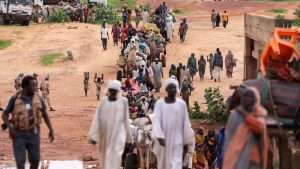
Beginning in 2003, Bashir’s government deployed Arab tribal militias — collectively known as the Janjaweed — against non-Arab African communities in the western Darfur region. The campaign of mass killing, rape, and forced displacement was later designated a genocide by the International Criminal Court, which issued an arrest warrant for Bashir himself in 2009 — the first time the ICC had indicted a sitting head of state. The Janjaweed killed an estimated 200,000 to 400,000 people and displaced over 2.5 million more. Their commander was a relatively unknown figure at the time — Mohamed Hamdan Dagalo, who would later become known to the world as ‘Hemedti.’
In 2019, after three decades of dictatorship, the Sudanese people rose up. Mass protests — driven largely by young people and women — swept through Khartoum and other cities. In April 2019, the military removed Bashir from power. For a brief moment, it seemed Sudan might finally transition to democratic civilian rule. That hope was systematically dismantled over the next two years.
Part II — The Two Generals: How the Seeds of War Were Planted (2019–2023):
When Bashir fell, two military men emerged as the dominant forces in Sudan:
General Abdel Fattah al-Burhan — a career soldier and longtime regime loyalist — became the head of the Sudanese Armed Forces (SAF) and the de facto head of state. He positioned himself as the leader of a ‘transitional’ government that would eventually hand power to civilians.
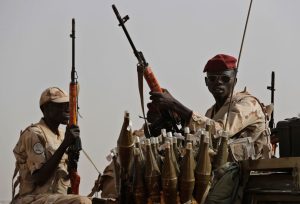
General Mohamed Hamdan Dagalo — ‘Hemedti’ — commanded the Rapid Support Forces (RSF), the paramilitary group that had evolved directly from Bashir’s Janjaweed militias. By 2019, Hemedti had transformed the RSF from a regional death squad into a national force of approximately 100,000 fighters. He had also become fabulously wealthy through control of Sudan’s goldfields, particularly in Darfur and Kordofan — a wealth he carefully cultivated into political influence far beyond Sudan’s borders.
Under international and domestic pressure, Burhan and Hemedti agreed in 2021 to a joint civilian-military transitional framework — but then jointly conducted a coup in October 2021, overthrowing the civilian government they had agreed to protect. The two generals shared power through a body called the Sovereignty Council. But beneath the surface, a catastrophic power struggle was building.
The central dispute was simple but irresolvable: any transition to civilian government would require the RSF to be integrated into the regular national army under unified command. For Hemedti, this was existential. His power, his wealth, and his independence all depended on the RSF remaining a separate force under his personal command. He refused integration. Burhan insisted on it. Deadlines were missed. Tensions escalated. By early April 2023, both forces had deployed across Khartoum.
“The current war is best understood as a war between counterrevolutionary factions backed by internal and external actors whose interests make them determined to preserve Sudan’s military state.” — Arab Center Washington DC
On April 15, 2023, a series of explosions shook Khartoum. Both sides accused the other of firing first. Sudan’s civil war had begun.
Part III — The War: What Is Actually Happening on the Ground:
What began as a power struggle in Khartoum rapidly consumed the entire country. The SAF — Sudan’s official national army — controls the government, based in the eastern city of Port Sudan, and has the backing of Sudan’s formal state institutions. The RSF — Hemedti’s paramilitary force — operates across vast swathes of central and western Sudan, particularly in Darfur and Kordofan.
By 2025, Sudan effectively had two rival governments: the SAF’s ‘Hope Government’ in Port Sudan in the east, and the RSF’s ‘Government of Peace and Unity’ in Nyala, Darfur, in the west. Each claims legitimacy. Neither represents the Sudanese people.
The city of Khartoum, once a modern and vibrant capital, was turned into a battlefield. For over a year, the RSF controlled much of the city while the SAF fought to reclaim it. By March 2025, the SAF had retaken Khartoum — but the city had been devastated. Infrastructure destroyed. Hospitals looted. Civilians killed.
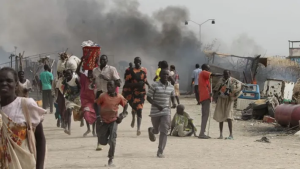
In Darfur, the situation is far worse. The RSF — led by the same commanders who committed the original Darfur genocide two decades ago — has been carrying out systematic ethnic cleansing against non-Arab communities, particularly the Masalit people of West Darfur. In October 2025, after an 18-month siege, the RSF captured El Fasher — the last major SAF stronghold in Darfur and the last refuge for hundreds of thousands of displaced civilians. What followed was described by human rights organisations as one of the worst atrocities of the 21st century. Satellite images showed blood-stained streets visible from space. The UN described it as a massacre echoing the darkest days of the original Darfur genocide.
Both the SAF and the RSF have committed war crimes. The SAF has carried out indiscriminate airstrikes on civilian areas, allied with Islamist militias linked to the old Bashir regime, and been accused of targeted killings. But the scale of atrocities committed by the RSF — genocide in Darfur, mass rape used systematically as a weapon of war, ethnic cleansing, the deliberate targeting of hospitals and aid convoys, and the recruitment of child soldiers — places it in a different category entirely.
The Humanitarian Toll as of 2026 is Staggering:
▶ 150,000+ people killed
▶ 14 million people forcibly displaced — the largest displacement crisis on earth
▶ 28.9 million people acutely food insecure — more than half the entire population
▶ Sudan has more people living in famine conditions than the rest of the world combined
▶ 4 million children acutely malnourished; 770,000 at imminent risk of death
▶ 460 patients and family members killed in a single hospital attack on October 28, 2025
Part IV — The Foreign Powers: A War by Proxy:
Sudan’s civil war did not stay inside Sudan. Almost from the beginning, foreign powers chose sides — transforming a domestic power struggle into a geopolitical battleground shaped by gold, oil, access to the Red Sea, and regional rivalries.
On one side, backing the RSF:
The United Arab Emirates (UAE) — the primary and most consequential foreign backer of the RSF. The full extent of UAE involvement is detailed in Part V. Beyond the UAE, Russia — through the Wagner Group, now rebranded as Africa Corps — has provided mercenary fighters and political support to the RSF, motivated by Sudan’s strategic location and its own desire for a Red Sea naval base. Ethiopia has provided diplomatic backing to the RSF, largely due to its own regional tensions with Egypt over the Grand Ethiopian Renaissance Dam on the Nile. In February 2026, Reuters reported that Ethiopia was hosting an RSF military training camp near the Sudan border with financial and military support from the UAE.
On the other side, backing the SAF:
Saudi Arabia — which sees Sudan as a critical ally in countering Iranian influence across the region — has provided massive financial support to the SAF government. In October 2025, the SAF-backed government announced that Saudi Arabia planned to invest an additional $50 billion into Sudan, on top of $35 billion already invested. Egypt — allied with Burhan over the Nile dam dispute with Ethiopia — has supplied the SAF with warplanes and pilots. Iran has provided the SAF with attack drones following the renewal of diplomatic ties in October 2023. Russia also provides the SAF’s government with diplomatic cover at the UN Security Council.
What emerges from this picture is a proxy war in which UAE and Saudi Arabia — two Gulf monarchies that are nominally allies — are backing opposite sides of the same conflict. Their rivalry over influence in the Horn of Africa and the Red Sea is being fought with Sudanese lives.
Part V — The UAE and the Gold: ‘Blood Ingots’ Funding Genocide:
Of all the foreign actors involved in Sudan’s conflict, none has drawn more scrutiny — or bears more documented responsibility for its continuation — than the United Arab Emirates. And at the heart of UAE’s involvement is gold.
Sudan is one of Africa’s largest gold producers. Its goldfields — concentrated in Darfur, Kordofan, and the River Nile state — represent enormous wealth. Before the war, gold accounted for approximately 49% of Sudan’s total exports. Since the war began, control of those goldfields has become one of the primary military objectives of both sides — and the primary source of funding for the RSF.
The RSF, through a company called Al-Junaid Multi-Activities Co. — controlled by Hemedti’s family — effectively runs a parallel gold economy in RSF-controlled territories. RSF fighters seize artisanal mines, force local miners to work under armed supervision, and extract gold that is then smuggled out of Sudan through a carefully constructed network of routes:
▶ From RSF-controlled Darfur and Kordofan → Chad, Libya, Central African Republic, South Sudan
▶ From those transit countries → Dubai, UAE
▶ In Dubai → gold is commingled with legally sourced gold, refined, and sold on global markets
▶ Revenues → recycled back to RSF as weapons, drones, and military supplies
The numbers are staggering. According to data from Sudan’s Central Bank, 96.8% of Sudan’s declared gold exports in 2024 went to the UAE — worth $1.5 billion. But the declared figures are only part of the story. According to SWISSAID, a Swiss development organisation that has tracked African gold flows for over a decade, the UAE imported 29 tonnes of gold directly from Sudan in 2024 — a 70% increase from 17 tonnes the year before — even as international embargoes targeted conflict gold exports. When transit routes through Chad, Libya, and Egypt are included, the true volume is far higher.
“In 2024 alone, the UAE imported roughly 29 tonnes of gold from Sudan — a 70% increase from the previous year — even as international embargoes targeted conflict gold exports.” — SWISSAID, November 2025
The smuggling operation is sophisticated and deliberate. Aerial imagery obtained by investigators in March 2025 revealed approximately 40 mining tunnels at a single RSF-controlled site in North Kordofan, with makeshift runways immediately adjacent — allowing gold to be loaded directly onto small cargo aircraft and flown out of Sudan without passing through any official checkpoint or customs authority. UAE-based companies with links to the RSF act as buyers at the Dubai end, obtaining Chadian or Libyan documentation for the gold to obscure its Sudanese origins.
In a particularly damning finding, SWISSAID reported in November 2025 that data confirming UAE gold import volumes from Sudan had been briefly made available on the UN Comtrade platform before being quietly removed just days after publication — suggesting active efforts to suppress evidence of the scale of the trade.
The financial trail does not stop in Dubai. Investigations by The Sentry — an investigative organisation that tracks war crimes financing — linked multiple Dubai-based companies to laundering illicit Sudanese gold for RSF financiers. In January 2025, the Biden administration sanctioned seven UAE-based companies for funding Hemedti’s RSF. The US government simultaneously formally designated the RSF as having committed genocide.
The UAE has consistently denied arming the RSF or facilitating conflict gold imports. In November 2025, the UAE Ministry of Trade stated that its gold imports from Sudan totalled just $1.97 billion — representing 1.06% of the $186 billion in gold that passed through the Gulf state that year. Independent watchdogs, UN panel reports, and multiple governments have rejected these denials as inconsistent with the documented evidence.
Perhaps the most striking detail of the entire gold trade: even as Sudan’s SAF government was taking the UAE to the International Court of Justice in 2025, accusing it of genocide through arms support to the RSF, Sudan’s own Central Bank was simultaneously recording gold exports worth over $1 billion to the UAE. The financial dependence on Dubai as a gold market was so entrenched that even the government accusing the UAE of complicity in genocide could not afford to stop trading with it.
“Between 2012 and 2022, the UAE imported 2,569 tonnes of illegal gold from Africa, with an estimated value of USD 115 billion.” — SWISSAID African Gold Report, 2024

Part VI — The ICJ Case: A Legal Defeat on a Technicality:
In March 2025, Sudan filed a case against the UAE at the International Court of Justice (ICJ) in The Hague, accusing the Emirates of violating the 1948 Genocide Convention by arming, funding, and supporting the RSF’s campaign of ethnic cleansing against the Masalit people in Darfur. Sudan asked the court to impose emergency provisional measures — including an order for the UAE to immediately cease all support to the RSF.
On May 5, 2025, the ICJ dismissed the case. By a vote of 14 to 2, the court rejected Sudan’s request for provisional measures. By a narrower vote of 9 to 7, it removed the case from its docket entirely, ruling that it ‘manifestly lacked jurisdiction.’
The reason was a legal technicality that the UAE had quietly put in place twenty years earlier. When the UAE signed the Genocide Convention in 2005, it entered a reservation — a formal opt-out — to Article IX of the treaty, the clause that gives the ICJ jurisdiction to hear disputes between signatory states. In other words, the UAE had pre-emptively protected itself from exactly this kind of legal challenge, long before the Sudan war began.
The court’s dismissal was not a finding on the merits. The judges did not examine the evidence. They did not rule on whether genocide was occurring. They did not rule on whether the UAE was complicit. They simply determined that, because of the UAE’s 2005 reservation, they had no legal authority to proceed.
The decision was controversial even within the court itself. Seven of the sixteen judges dissented, expressing concern about what they described as a ‘rush to judgment’ that effectively denied Sudan access to justice in a case involving allegations of the most serious crime in international law. Dissenting Judge Yusuf argued that the case should at minimum have proceeded to the full preliminary objections phase, where both parties could have presented their full jurisdictional arguments.
Sudan’s representatives made clear that the dismissal does not absolve the UAE of moral or political responsibility — and that they would continue to pursue accountability through other international mechanisms.
Part VII — The World’s Silence: Why Sudan Is Being Ignored:
Sudan is, by virtually every measure, the world’s worst humanitarian crisis. More people are displaced than anywhere else on earth. More people are in famine conditions than in the rest of the world combined. The scale of atrocities in Darfur rivals or exceeds those of the original Darfur genocide that shocked the world in the early 2000s.
And yet Sudan receives a fraction of the international media attention of other conflicts. There are no sustained front-page campaigns. No major world leaders making impassioned speeches. No mass public movements demanding action.
Part of the explanation is geopolitical complexity — there is no clear ‘good side’ to rally behind, no single villain easy to name. But a larger part is that the countries most responsible for perpetuating the conflict — the UAE, Saudi Arabia, Egypt, Russia — are also deeply integrated into the global economic and security order that Western governments depend on. The UAE is a major trade partner, a financial hub, and a regional security ally for both the US and the UK. Holding it accountable for Sudan means disrupting relationships worth hundreds of billions of dollars.
The UK government, for example, held a Sudan peace conference in London in April 2025 — while simultaneously instructing its own diplomats not to speak publicly about UAE’s role in the conflict. The US sanctioned UAE-linked companies in January 2025 but has not imposed broader sanctions on the UAE itself. European countries import gold from Switzerland that has passed through Dubai — making them indirect beneficiaries of the same gold trade that funds the RSF’s genocide.
As one report put it: ‘Diplomacy is paralysed as both SAF and RSF leaders have little incentive to do a deal since they and their regional backers continue to profit from Sudan’s war.’
Conclusion — A War That Could Be Ended, But Isn’t:
Sudan’s catastrophe is not a natural disaster. It is not inevitable. It is the product of deliberate choices — by two generals who placed their personal power above the lives of their people, by foreign governments that chose profit and influence over human rights, and by an international community that has consistently looked the other way.
The gold flowing from Sudan’s shattered goldfields to Dubai’s gleaming refineries is not an abstraction. It is the direct financial engine of a genocide. Every tonne of Sudanese gold processed in Dubai, every weapon shipped back in exchange, every child soldier recruited into the RSF, and every massacre carried out in Darfur is part of the same chain — a chain that runs from an artisanal mine in Kordofan to a gold refinery in the UAE to a jewellery market in Switzerland to a consumer in London or New York who will never know the price that was paid.
For the 53 million people of Sudan — among them 4 million malnourished children, 14 million displaced persons, and the survivors of El Fasher — the war is not a geopolitical discussion. It is their reality. And it continues because the world, so far, has decided that their lives are worth less than the interests of those who profit from their suffering.
“Sudan is the largest humanitarian crisis in the world. More people are living in famine conditions in Sudan than the rest of the world combined.” — International Rescue Committee, 2026
References & Sources:
- Wikipedia. (2026). Sudanese civil war (2023–present). https://en.wikipedia.org/wiki/Sudanese_civil_war_(2023%E2%80%93present)
- Council on Foreign Relations. (2026). Civil War in Sudan — Global Conflict Tracker. https://www.cfr.org/global-conflict-tracker/conflict/power-struggle-sudan
- International Rescue Committee. (2026). Crisis in Sudan: What is happening and how to help. https://www.rescue.org/article/crisis-sudan-what-happening-and-how-help
- SWISSAID. (November 2025). United Arab Emirates: More Than Ever a Hub for Conflict Gold. https://www.swissaid.ch/en/media/united-arab-emirates-more-than-ever-a-hub-for-conflict-gold/
- AML Network. (November 2025). Gold for Genocide: The UAE’s Gold Trade and RSF’s Genocidal Campaign in Sudan. https://amlnetwork.org/watchdog-reports/corporate-laundering/
- The Conversation. (December 2025). Sudan’s civil war: A visual guide to the brutal conflict. https://theconversation.com/sudans-civil-war
- Arab Center Washington DC. (2026). Sudan’s War: The Failure of Mediation and the Struggle for Civilian Rule. https://arabcenterdc.org/resource/sudans-war
- Brookings Institution. (February 2026). Ending Sudan’s Civil War: A Roadmap to Peace and Reconciliation. https://www.brookings.edu/articles/ending-sudans-civil-war
- Al Jazeera. (May 2025). ICJ dismisses Sudan’s genocide case alleging UAE backing of RSF rebels. https://www.aljazeera.com/news/2025/5/5/icj-dismisses-sudans-genocide-case
- EJIL Talk. (May 2025). Judicial Restraint and Jurisdictional Clarity: Decoding the ICJ’s Decision in Sudan v. UAE. https://www.ejiltalk.org/
- Swissinfo. (2026). As Sudan’s agony deepens, scrutiny sharpens on UAE and gold. https://www.swissinfo.ch/eng/international-geneva/sudan-war-uae-gold-trade
- Beam Reports. (August 2025). Blood Ingots: How Sudan’s Gold is Smuggled to Fund Its Brutal War. https://en.beamreports.com/21776/
- SWISSAID African Gold Report. (2025). Sudan. https://www.africangoldreport.org/sudan/
- Sudan Tribune. (November 2025). Sudan accuses RSF of smuggling gold to UAE. https://sudantribune.com/article/307470
- Center for American Progress. (February 2026). How Congress Can Help Curb the UAE’s Role in Sudan’s Crisis. https://www.americanprogress.org/
- UN News. (2026). Sudan Conflict. https://news.un.org/en/focus/sudan-conflict
— Events Markaz News | Global Affairs & Investigations Desk —